
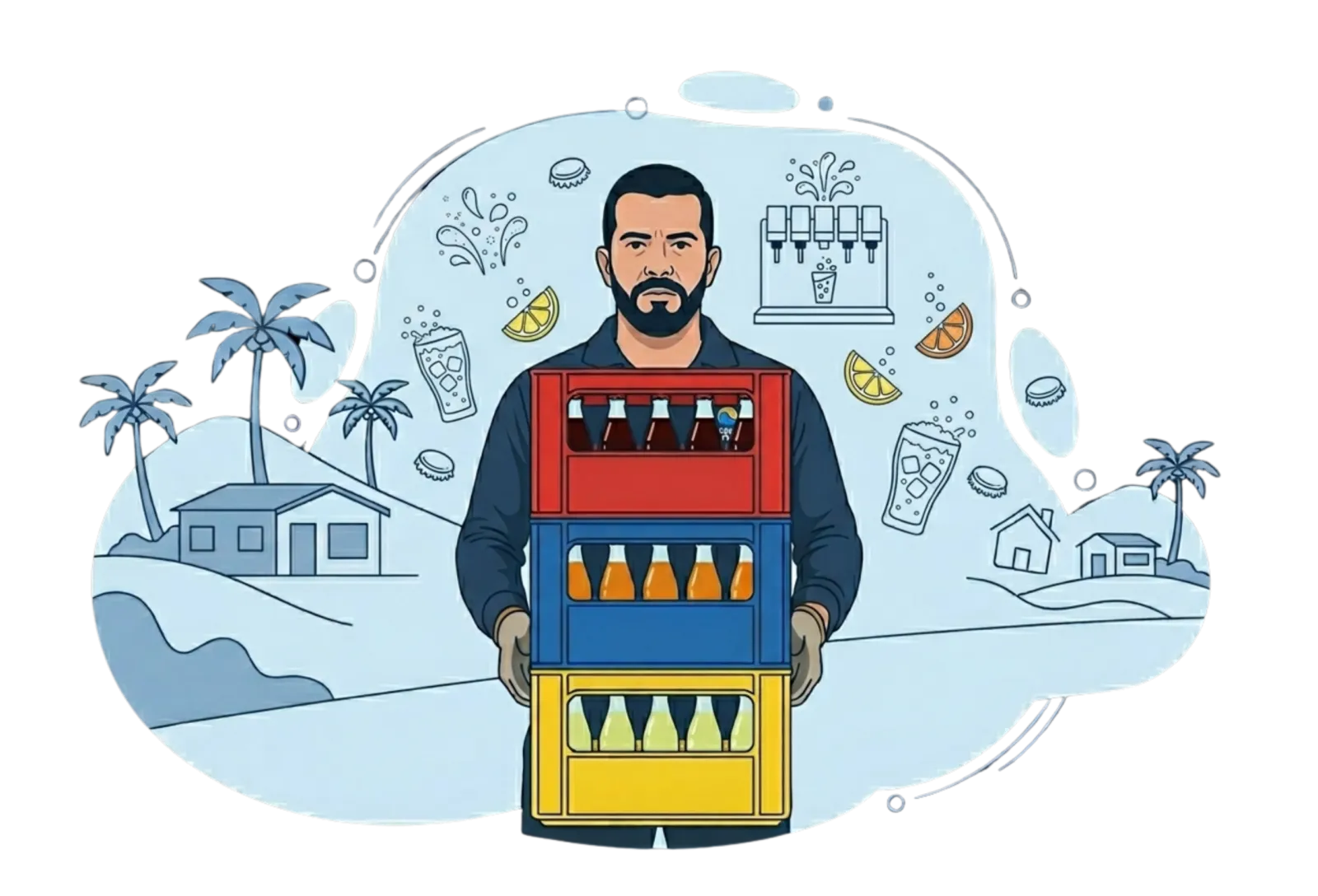
A soda delivery business is a traditional enterprise with a loyal customer base: families and businesses that receive their soda dispensers and jugs at their doorstep every week. Starting one today remains a good opportunity, provided that production, delivery, and—above all—container management are well planned.
1. Define your business model
There are two options: produce your own soda and water, or distribute products from a supplier. Producing requires more investment and permits, but it gives you a higher profit margin. Distributing is simpler to get started with and allows you to focus on building your customer base and delivery routes.
2. Authorizations and Requirements
If you plan to produce or package beverages, you need municipal authorization for your establishment and must comply with the Argentine Food Code, which generally involves registering your establishment and products with your province’s food safety authority. The procedures and costs vary by province and municipality, so be sure to check them before investing.
3. Equipment and Containers
To produce the product, you’ll need equipment for water treatment, carbonation, filling, and container washing. For distribution, you’ll need a vehicle suitable for transporting crates of siphons and jugs. And don’t forget the initial stock of containers: siphons, 12- and 20-liter jugs, and—if you plan to offer them—dispensers to lend out.
4. Create Your Itineraries
A soda delivery business relies on route-based deliveries: each area has its own delivery day, and each customer has their usual order. Start by covering a few areas thoroughly rather than many areas with few customers; that way, you’ll travel fewer kilometers per delivery and get more mileage out of your fuel.
5. Set prices based on actual numbers
The price of the jug and the siphon must cover the cost of production, distribution, and any lost containers. In this guide, we explain how to calculate it, and you can test different scenarios using the profitability calculator.
6. Monitor siphons, jugs, and dispensers from the start
The most costly mistake a seltzer delivery business can make is not knowing how many containers and pieces of equipment each customer has. A siphon that isn’t returned is lost inventory, and a dispenser that isn’t tracked is equipment you won’t get back. Start with our free container tracking spreadsheet, which includes a sheet for loaned items.
7. Switch to a system when you get older
When you add up routes and delivery people, a notebook just isn’t enough. We’ll show you how to make the switch from using a delivery notebook. With Yaku’s seltzer delivery software, you can track customers by route, container balances, loans, and customer balances—all in one place.
Conclusion
A well-organized seltzer delivery business has customers who have been shopping there every week for years. The key lies in efficient routes, carefully calculated prices, and strict control over the bottles and cans from day one.
Try Yaku free for 7 days. Plans start at $24 per month.

0 Comments